Building a WhatsApp-First Growth Engine for a South African Logistics Platform
Bubakii needed more than campaign activity. It needed a clear customer acquisition system that connected digital discovery, WhatsApp conversations, quote workflows, bookings, and service delivery.
The Business
About Bubakii
A South African logistics platform where trust, speed, and responsiveness shape the customer experience.
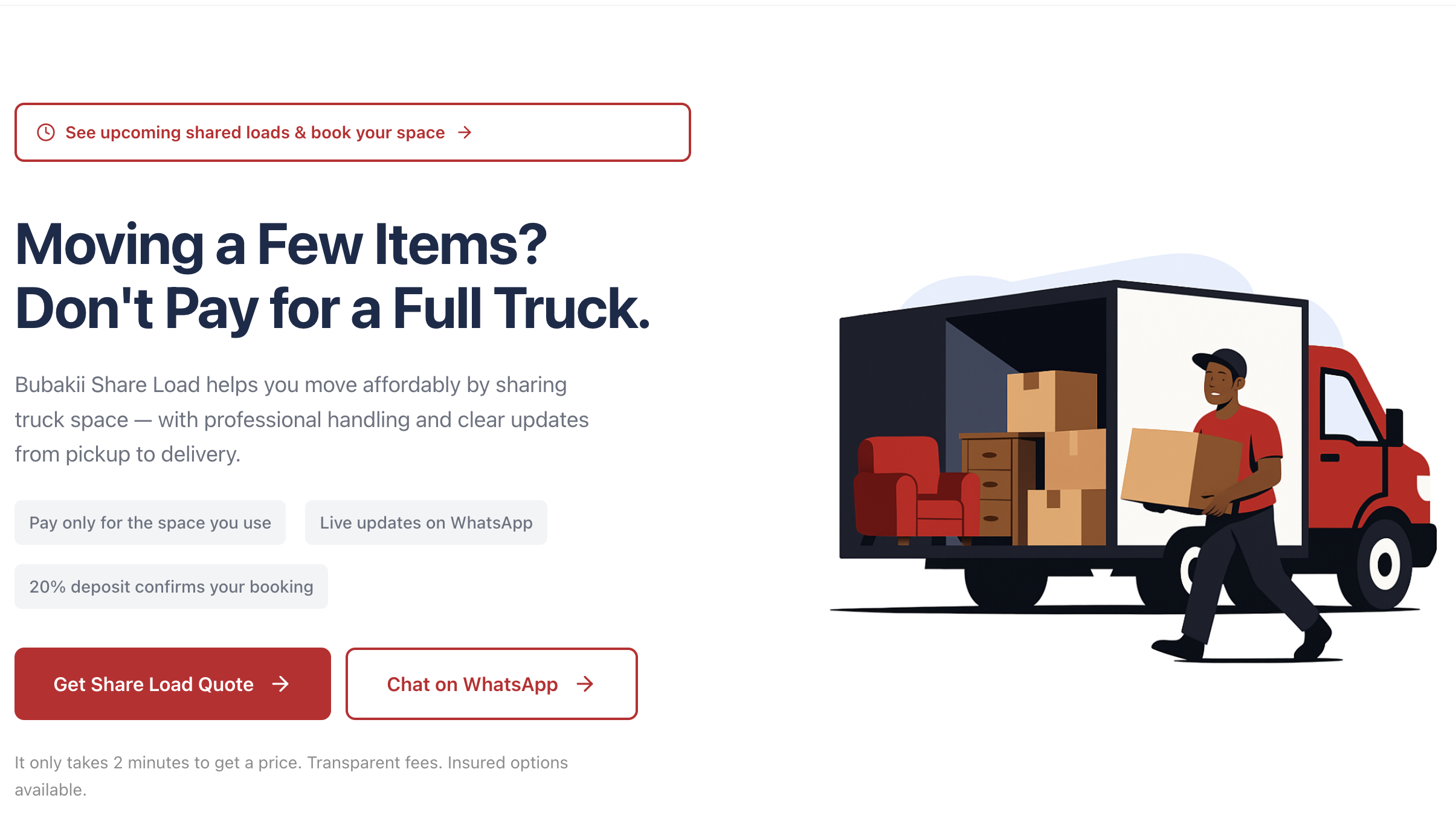
Bubakii is a South African logistics platform helping customers move furniture, book share-load transport, and access storage support through a fast, digital-first enquiry journey.
Most customers discover the service through digital channels, then request quotes through the website or WhatsApp. That makes the first few minutes of the customer journey critical: people are often comparing options, asking practical questions, and looking for a provider they can trust.
For Bubakii, growth depends on the connection between marketing, responsiveness, qualification, quoting, and operational follow-through.
Services
- Furniture removals
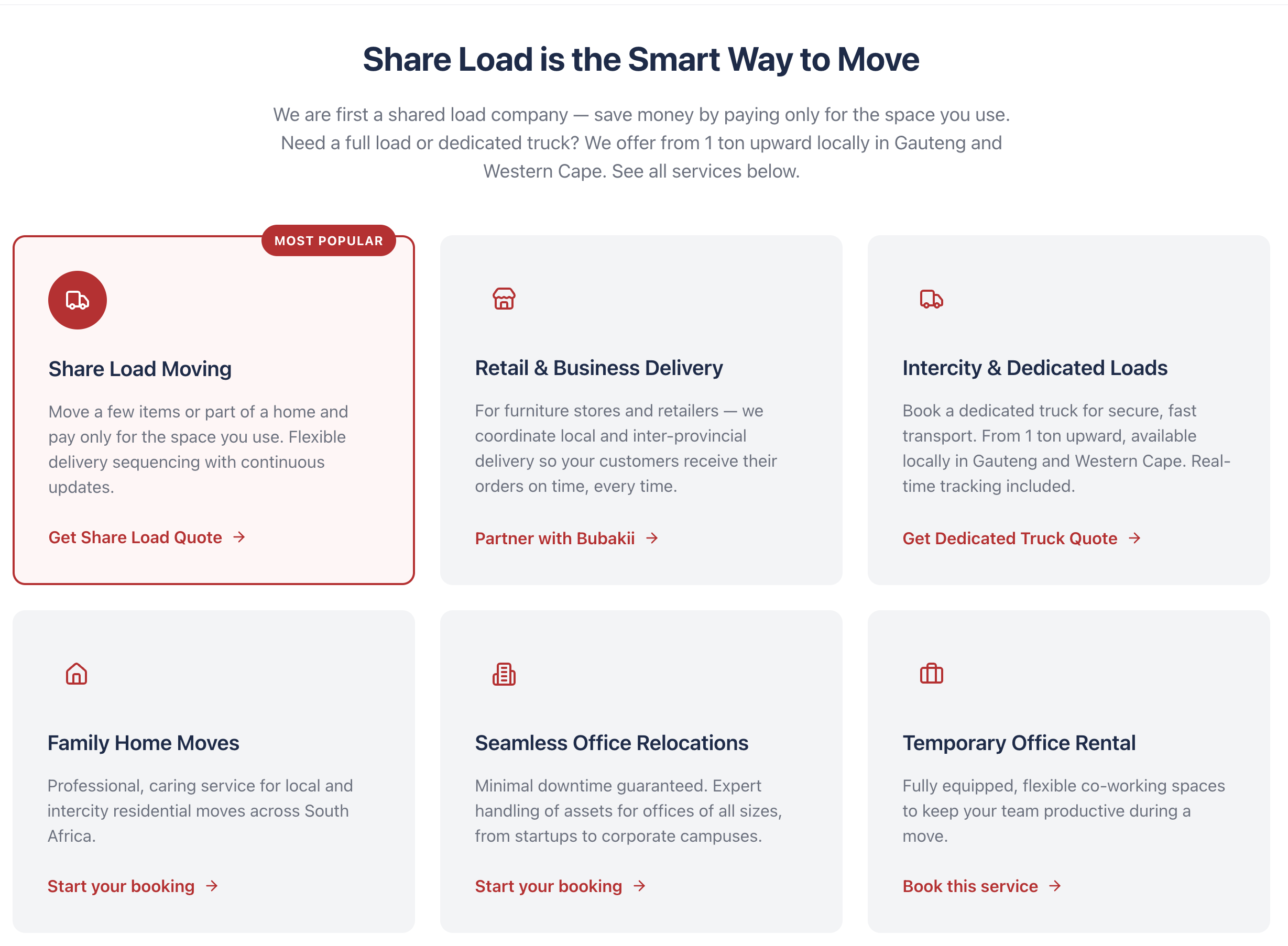
- Share-load transport
- Storage support
Growth Depends On
- Fast response to enquiries
- Clear WhatsApp communication
- Reliable quote and booking follow-up
The Challenge
The Challenge
Bubakii had customer enquiries and operational activity, but needed clearer visibility into how people moved from first contact to confirmed work.
Attribution Blind Spot
The business could see enquiries coming in, but it was difficult to understand which channels and conversations were producing meaningful opportunities.
Qualification Bottleneck
Many customers started conversations, but the business needed a clearer way to decide which enquiries were ready for quoting and follow-up.
Funnel Visibility
Customer movement from enquiry to quote to booking was happening across different touchpoints, making it hard to see where momentum was being lost.
Operational Feedback
Marketing performance depended on response speed, quote quality, and service delivery, but those operational signals were not yet fully connected to acquisition decisions.
My Role
My Role
I worked across the digital product, acquisition journey, reporting layer, and optimisation process. The goal was to make Bubakii easier to discover, faster to engage with, and more measurable as enquiries moved through the business.
Website Development
Built and improved the digital entry points where customers discovered services and requested quotes.
Lead Capture Systems
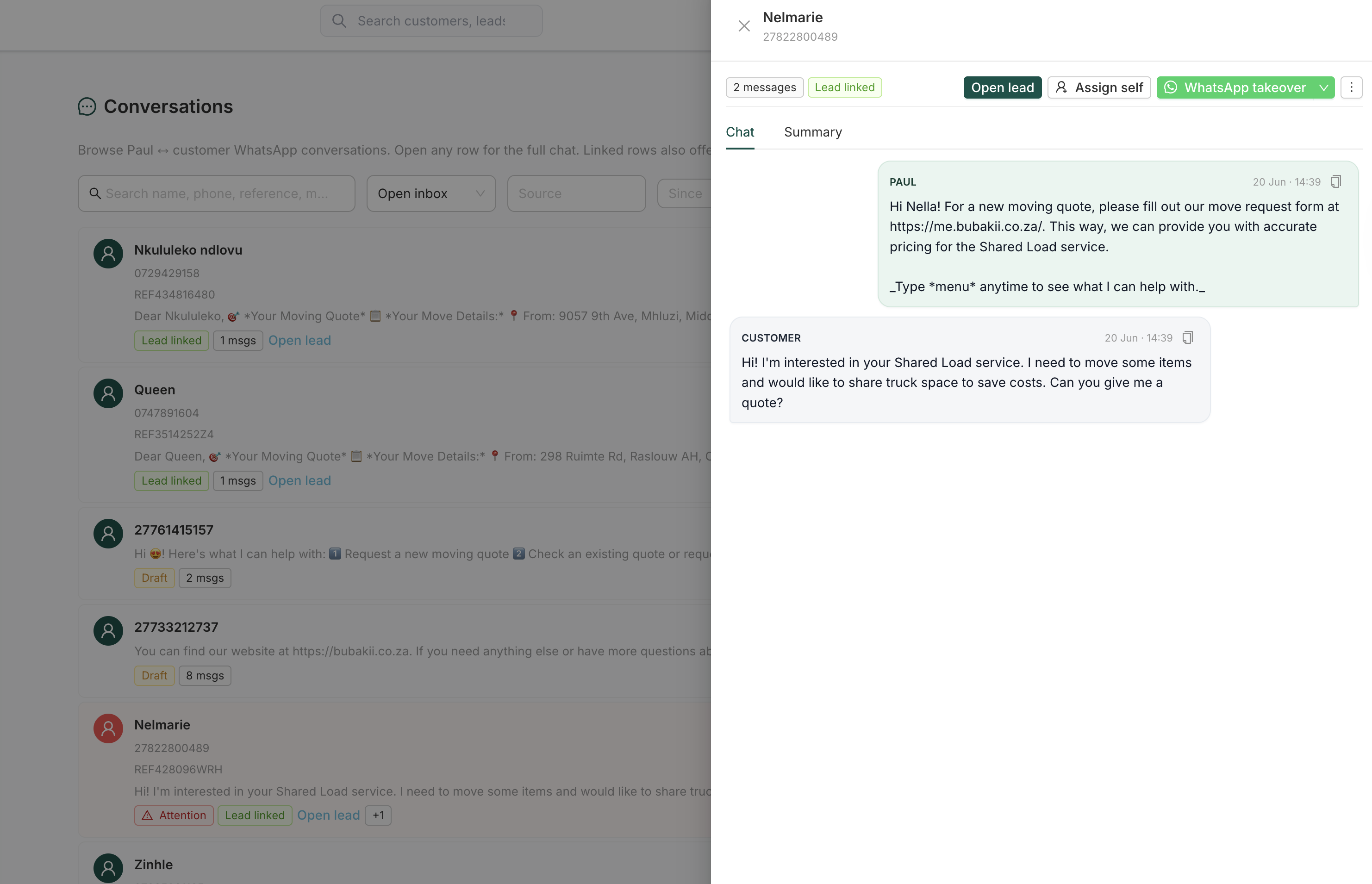
Designed the process for turning online enquiries and WhatsApp conversations into trackable leads.
WhatsApp Workflows
Structured the conversation journey so customer details could be collected quickly and consistently.
Customer Journey Design
Mapped the steps from discovery to booking so the business could understand where momentum was gained or lost.
Marketing Analytics
Connected campaign, conversation, quote, and booking data into a clearer performance view.
Funnel Reporting
Created reporting that showed how demand moved through the acquisition system.
Conversion Optimisation
Identified bottlenecks and recommended practical changes to improve quote readiness and booking conversion.
Performance Measurement
Translated marketing activity into commercial indicators the business could use for decisions.
Customer Journey
Mapping the Customer Journey
Before looking at dashboards, the first step was to understand what customers were actually trying to do. Bubakii's journey was not a simple website conversion path. It was a trust-building process across ads, referrals, WhatsApp conversations, qualification, quoting, and delivery.
Facebook / Website / Referral
Customers discover Bubakii while searching for a practical moving or storage solution.
WhatsApp Conversation
The relationship starts through a fast, familiar channel where questions and details are exchanged.
Lead Capture
Customer details, route, load type, and timing are captured so the enquiry can be managed.
Qualification
The business determines whether the customer has enough information and intent to move toward a quote.
Quote
A commercial proposal is created based on the customer's route, items, timing, and service needs.
Booking
The customer confirms the move, turning demand into scheduled operational work.
Move Completed
Service delivery closes the loop and influences reviews, referrals, and repeat demand.
Acquisition System
Building the Acquisition Engine
The acquisition engine was designed around the way customers already behaved: discover the service digitally, ask questions quickly, and expect a responsive quote process. The system combined paid campaigns, WhatsApp-first engagement, structured lead capture, qualification workflows, and quote follow-up.
Meta Advertising Campaigns
Used paid social to generate demand from customers actively considering moving, storage, or share-load transport.
WhatsApp-First Engagement
Routed enquiries into a channel customers trusted, making the journey feel direct and responsive.
Lead Capture Process
Converted conversations into structured lead records that could be followed, analysed, and improved.
Qualification Workflow
Defined what information was needed before a customer could move confidently toward a quote.
Quote Generation Process
Linked customer requirements to commercial proposals and booking follow-up.
What We Discovered
Key Discoveries
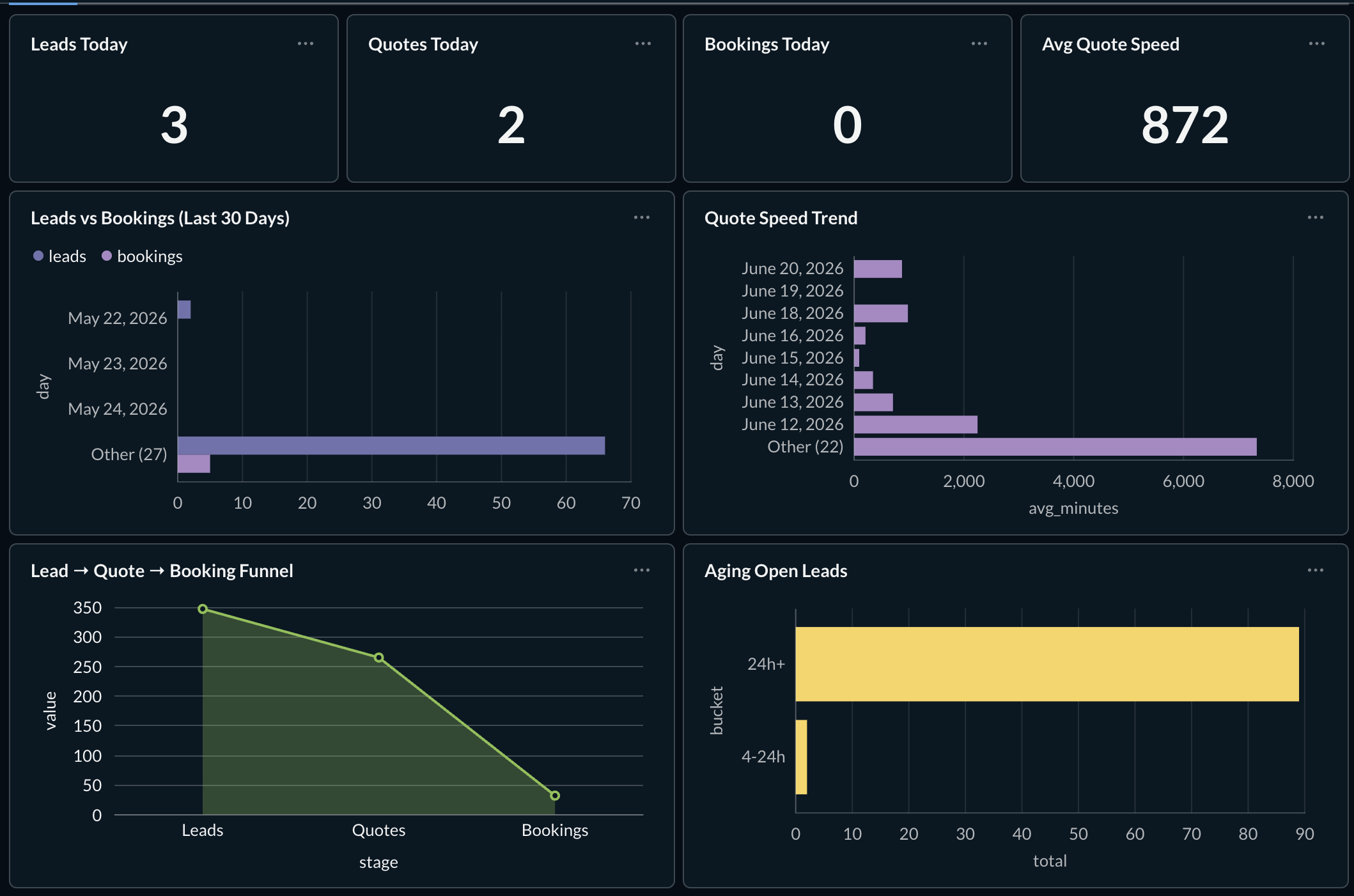
Analytics entered the story after the customer journey was mapped. The focus was not on producing more reports, but on finding what the acquisition system was telling us.
Qualification was the largest bottleneck
The main constraint was not demand generation alone. It was the ability to turn conversations into quote-ready opportunities.
Improving qualification could increase sales efficiency without simply spending more on ads.
Attribution data was incomplete
Customer activity was spread across campaigns, WhatsApp, quote records, and bookings, which made source-level performance difficult to trust.
Measurement needed to be designed into the journey before campaigns could scale responsibly.
Demand varied by route
Some logistics routes showed stronger customer demand and clearer commercial potential than others.
Campaign planning could become more route-aware instead of treating all demand as equal.
Conversion after quoting was strong
Once customers reached the quote stage, the business had a much clearer path toward bookings and completed work.
The opportunity was to protect downstream performance while improving upstream quality and qualification.
Funnel Analysis
Funnel Analysis
Once the journey was understood, the funnel became useful as a diagnostic tool rather than the opening act.
Conversations
Customer enquiries
1,202
Leads
Pipeline entries
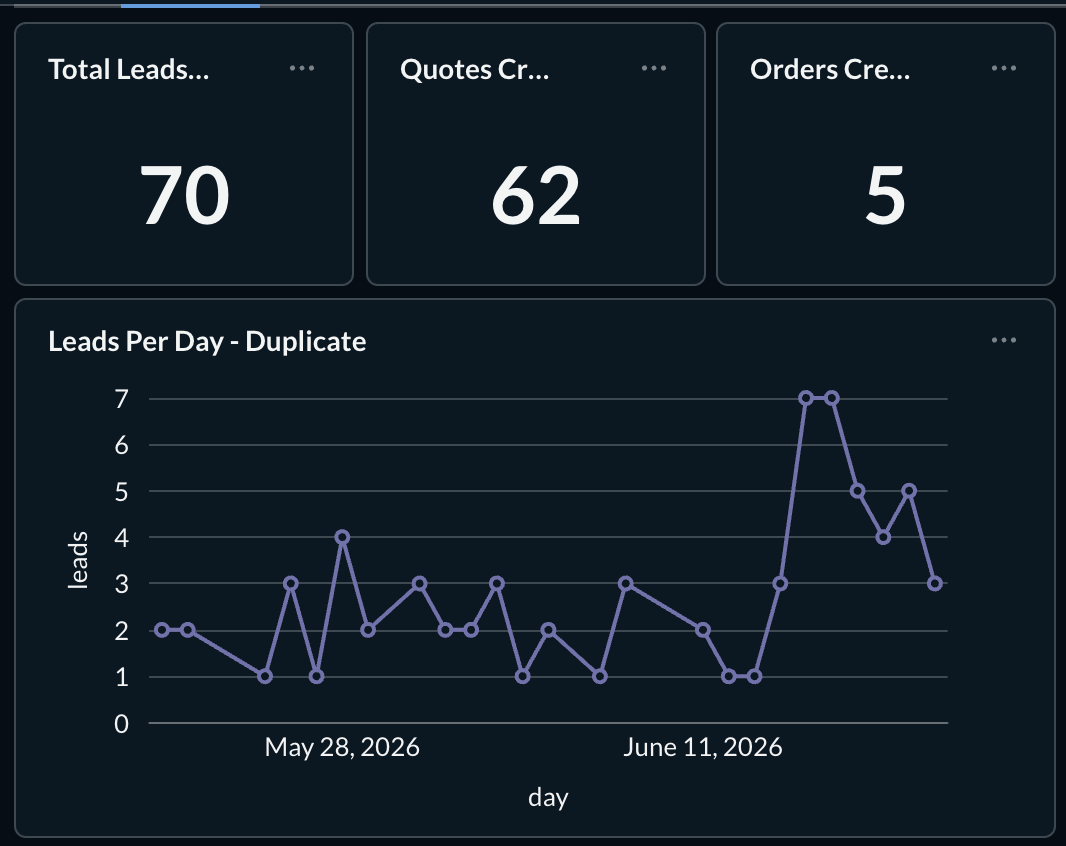
109
9.1%
Quotes
Includes returning customers
123
112.8%
Bookings
Quote-to-booking
80
65.04%
Completed Moves
Job completion rate
80
100%
The funnel showed that Bubakii could convert strongly once customers reached the quote and booking stages. The bigger opportunity was earlier in the journey: improving how conversations became qualified, quote-ready opportunities and making sure campaign attribution followed the customer all the way through to completed work.
Leads
109
Pipeline entries
Quotes
123
Commercial proposals
Bookings
80
Confirmed jobs
Revenue
R1.44M
Booked revenue
Quote-to-Booking
65.04%
Conversion rate
Lead-to-Quote
112.8%
Includes returning customers
People Reached
187,668
Campaign reach
Ad Spend
R24,173
Managed budget
Key Learnings
What This Project Taught Me
The most useful lessons were strategic: growth depends on how well marketing, customer experience, sales follow-up, and operations work together.
Measuring the full funnel matters more than measuring lead volume
Lead volume is useful, but it does not explain whether the business is creating qualified demand, converting quotes, or completing work profitably.
Attribution must be designed before scaling campaigns
If source tracking is not built into the customer journey early, it becomes difficult to know which campaigns deserve more investment.
Customer qualification has a major impact on conversion efficiency
The quality of information collected in the first conversation shapes quoting speed, sales focus, and the likelihood of booking.
Operational performance directly influences marketing performance
In a service business, response time, quote clarity, and delivery experience all affect acquisition, referrals, retention, and conversion.
Interested in this approach?
I help marketing teams connect campaigns to customer acquisition, conversion performance, and measurable business outcomes.